

What's the Difference Between a Roastery and a Café?
What's the Difference Between a Roastery and a Café?
We get this one a lot, usually from people who've just found out we're a roastery. A roastery and a café are two different businesses that happen to sell the same product in very different forms.
Different customer, different business
The clearest way to think about it: a café sells to people, a roastery sells coffee (often to businesses).
A café is what's known as B2C — business to consumer. Someone walks in, orders a flat white, and the café is responsible for the entire experience: the beans, the machine, the barista's skill, the music, the seating, the five minutes of someone's morning. A roastery, like Margaret River Roasting, is closer to B2B — business to business (Folly Coffee has a good rundown of the wholesale-roaster-vs-coffee-shop distinction if you want the fuller picture). Isaac and the team's job is to source green beans and roast them well; a lot of that roasted coffee then goes on to other businesses — cafés, restaurants, offices — who prepare and serve it to their own customers. We also sell direct to home coffee drinkers, but the core craft is the same either way: get the bean right before it ever reaches a cup.
Where the work actually goes
Because a roastery doesn't have to run a dining room, the day-to-day looks completely different. A roastery's whole operation is built around sourcing, roasting, quality control, and getting bags out the door. With a much sharper focus on the coffee itself rather than the full hospitality experience. A café, on the other hand, needs to manage the entire customer journey — service, atmosphere, food, timing — on top of just making good coffee.
Neither is easier than the other. It's just a different set of skills. A great roaster and a great barista are both craftspeople, but they're solving different problems.
The money side works differently too
This is where it gets genuinely interesting from a business standpoint, not just a "what's the vibe" standpoint.
Wholesale roasting (selling bulk roasted coffee to cafés and other businesses) tends to run on thinner margins but it comes with steadier, more predictable revenue once you land a client, since you generally know roughly how much they'll reorder and when. Retail — selling bags directly to individual customers, whether through a shop, a market stall, or online — carries higher margins, but revenue is lumpier month to month because you're relying on lots of smaller, less predictable purchases rather than a few big recurring ones.
Interestingly, businesses that do both — wholesale and direct retail — tend to come out ahead on overall profitability, because the steady wholesale volume balances out the higher-margin but less predictable retail side (Bellwether Coffee's guide to starting a profitable roasting business digs into the margin numbers behind this if you're curious).
So which one are we?
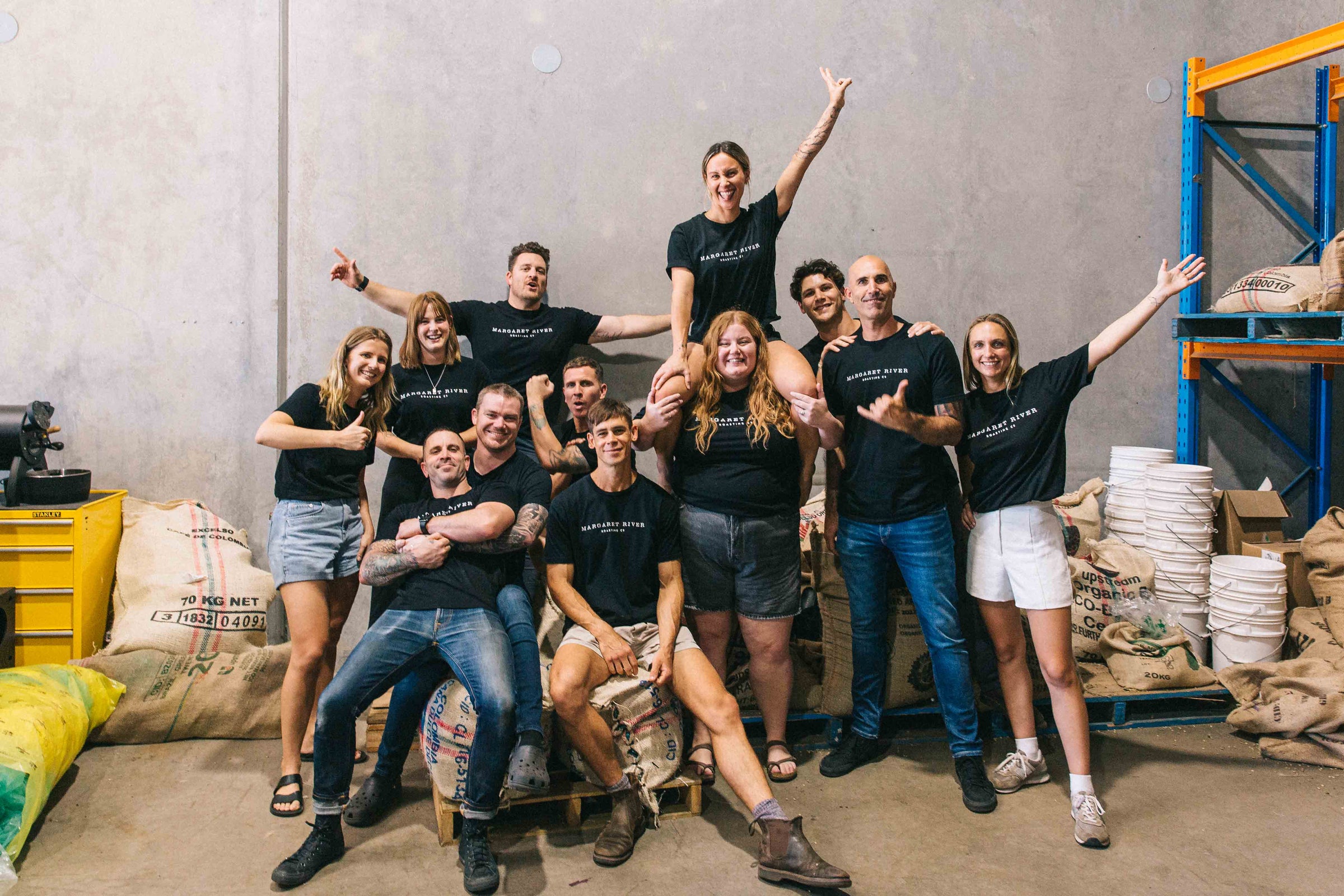
Margaret River Roasting is a roastery first — that's the core of the business — but we also run a small café, so we get to see both sides of this up close. The café gives us a direct line to how people actually experience our coffee in the cup, cup by cup, conversation by conversation. But the bulk of what we do happens well before that: sourcing, roasting, and quality control, then getting that coffee out to other cafés and businesses as well as home coffee drinkers. If you've ever had our coffee at another local café, there's a good chance it came out of our roastery first — and if you've had it at ours, you've seen the whole thing come full circle in one space.
If you want to skip the café altogether and taste what we roast at home, that's exactly what our Ultimate Bundle is built for.


Leave a comment